Senate Democrats Challenge Trump’s Claims About Iran Conflict Timeline
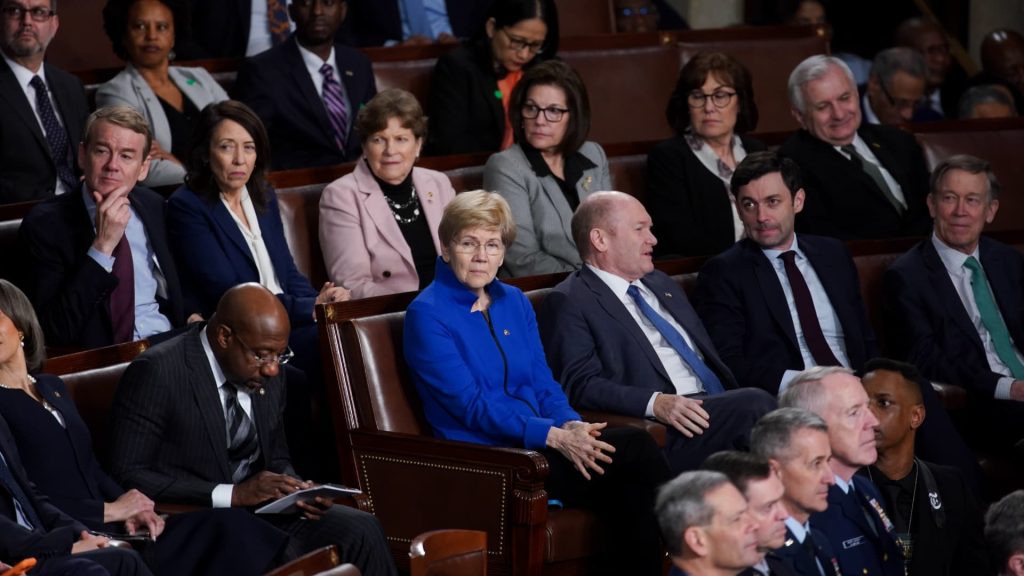
Democratic senators strongly disputed President Trump’s assertions that military operations against Iran could conclude shortly, expressing alarm that America might become entangled in another extended Middle Eastern conflict.
Following a classified congressional briefing with defense officials on Tuesday, Democratic lawmakers voiced skepticism about the administration’s optimistic timeline. This contrasts sharply with Trump’s Monday statements suggesting the military campaign was approaching completion, remarks that boosted financial markets and caused oil prices to plummet after recent dramatic increases.
The briefing occurred amid ongoing confusion from the Trump administration regarding objectives, explanations, and schedules for the conflict that has claimed eight American military lives and resulted in the death of Iran’s supreme leader, Ayatollah Ali Khamenei.
Senator Jacky Rosen of Nevada, who serves on the Armed Services Committee and attended the briefing, expressed deep unease about what she learned. She questioned the administration’s strategic vision and criticized the lack of clarity regarding long-term plans, suggesting the president appears intent on initiating an indefinite military engagement without proper congressional discussion.
Rosen emphasized that conflicts cannot be resolved simply through presidential declarations, noting that wishing for an end does not make it reality.
Democratic pessimism about concluding the U.S.-initiated conflict alongside Israel emerged as Congress anticipates requests for additional military funding. The operation has depleted billions in American weaponry that requires replacement, prompting some Democrats to pledge resistance against further financial support. Critics also condemned Trump for launching military action without seeking congressional approval.
Senator Elizabeth Warren of Massachusetts, the ranking Democrat on the Banking Committee, declared her firm opposition to supplemental funding requests. She emphasized Congress’s constitutional authority to restrict such actions through budgetary controls, arguing the conflict lacks domestic support and fails to enhance national security.
While lawmakers leaving the briefing reported no specific figures for potential funding requests, Republicans maintaining a 53-47 Senate majority appeared receptive to additional war financing.
Senator Jim Banks of Indiana acknowledged operational costs while arguing the benefits outweigh expenses, praising the mission’s effectiveness thus far. He advocated for providing necessary resources to complete objectives quickly.
According to Washington Post reporting, military forces consumed $5.6 billion in munitions during the conflict’s initial 48 hours beginning February 28. The Center for Strategic and International Studies estimates daily operational costs at approximately $891 million.
Senator Tim Sheehy of Montana, a Marine veteran, defended expenditures by characterizing the situation as ending a 47-year conflict with Iran, referencing the timeline since the current Iranian government assumed power. He criticized previous administrations for providing billions to Iran.
Trump and Defense Secretary Pete Hegseth have presented more optimistic assessments than Democratic concerns suggest. Hegseth pledged Tuesday against entering another protracted Middle Eastern engagement, while Trump predicted a swift conclusion.
Escalating costs are anticipated as operations continue, with Democrats warning of no visible endpoint. Extended conflict could reverse market gains and sustain elevated oil prices, particularly given ongoing disruption to the Strait of Hormuz, through which approximately 20% of global oil shipments pass.
Senator Tim Kaine of Virginia noted the absence of discussion regarding safe passage through the strategic waterway during his portion of the briefing.
Senator Mark Kelly of Arizona, a former Navy captain, similarly expressed doubt about approaching conflict resolution after the meeting, criticizing the administration’s lack of strategic objectives, planning, timeline, or exit strategy.